Portugal's attacking philosophy has long orbited around Cristiano Ronaldo, a gravitational force so dominant that tactical discussions often reduce to a single question: how do we get the ball to him? On Sunday, Francisco Conceição offered a refreshing counterpoint to that well-worn script, rejecting the notion that his team operates under any obligation to funnel possession toward their talismanic forward. The comment, seemingly modest in isolation, carries considerable weight in the context of Portugal's evolving identity and the delicate generational transition underway within the national setup. As Ronaldo enters the twilight of his international career, the Seleção faces a critical juncture: learning to win without defaulting to their most celebrated player, and proving that the team's attacking potency extends far beyond one man's genius.
The Weight of Expectation Around Ronaldo
For nearly two decades, Cristiano Ronaldo has been Portugal's primary offensive weapon, the player opponents fear most and teammates instinctively seek in dangerous moments. That reality has shaped how the national team is perceived, analysed, and tactically constructed. Commentators, rival coaches, and even casual observers have grown accustomed to framing Portugal's attacking play through the lens of Ronaldo's involvement—how many touches he receives, whether he's being "starved" of the ball, whether the midfield is adequately supplying him. This narrative has become so entrenched that it functions almost as an unspoken law of Portuguese football: maximise Ronaldo's opportunities, and success will follow.



Conceição's intervention suggests a deliberate effort to dismantle that assumption. By explicitly stating there is no obligation to constantly seek Ronaldo, he signals that Portugal's coaching staff is thinking beyond the reflexive dependency on one player. This is not a slight against Ronaldo—his quality remains undeniable—but rather a recognition that sustainable team success, particularly in tournament football, requires a more distributed attacking responsibility. The comment also reflects a broader maturity in how modern football views star players: as part of a system rather than the system itself. Portugal has other attacking talents, other creative pathways, and other ways to break down defences. Conceição's words suggest the team is being encouraged to explore them.
Tactical Flexibility and the Broader Squad
| # | Team | P | GD | Pts |
|---|---|---|---|---|
| 1 |  | 3 | +6 | 7 |
| 1 |  | 3 | +5 | 9 |
| 1 |  | 3 | +1 | 5 |
| 1 |  | 3 | +2 | 6 |
| 1 |  | 3 | +1 | 4 |
| 1 |  | 3 | +2 | 6 |
Portugal's squad contains multiple attacking options capable of influencing matches independently. Conceição himself, playing for Liverpool, represents a new generation of Portuguese wingers with pace, directness, and goal-scoring threat. Bruno Fernandes continues to evolve as a creative hub. Diogo Jota, when fit, offers intelligent movement and finishing. The midfield has depth and technical quality. Yet the historical tendency has been to view these players as supporting cast in a Ronaldo-led narrative rather than as primary architects of attacking play.
By rejecting the obligation to constantly feed Ronaldo, Conceição is implicitly endorsing a more fluid, less predictable attacking structure. This has tactical advantages: opponents cannot simply double-mark Ronaldo and suffocate Portugal's threat, because the ball will move through other channels. It also distributes fatigue and responsibility more evenly across the forward line, reducing the burden on any single player to produce decisive moments. In tournament football, where matches come thick and fast and injuries can derail campaigns, this flexibility is invaluable. A team that can win through different attacking patterns is harder to prepare for and more resilient when key players are unavailable or underperforming.
Generational Transition and Long-Term Planning
Ronaldo's international career, while still active, is clearly in its final chapter. Portugal's coaching staff must be thinking seriously about what the team looks like when he is no longer available—whether through retirement or simply through the natural decline that affects all players. Conceição's comments suggest that rather than waiting for that transition to occur, Portugal is beginning to build attacking patterns and confidence that do not depend on Ronaldo's presence. This is prudent planning.
The 2026 World Cup will likely be Ronaldo's last realistic opportunity to compete at the highest level. Portugal will want to maximise his contribution in that tournament, but they cannot afford to construct their entire campaign around him. By developing attacking fluidity now, by encouraging other players to take responsibility, and by building a team identity that transcends any individual, Portugal is positioning itself for both immediate success and long-term sustainability. Conceição's statement is part of that process—a public signal that the team is evolving, that younger players are being trusted, and that Portugal's attacking threat is not a one-man show.
The Broader Message to the Squad
There is also a leadership dimension to Conceição's comment. By publicly rejecting the idea of obligation to Ronaldo, he is sending a message to the entire squad: your contributions matter, your creativity is valued, and you are not merely supporting players in someone else's story. This can be psychologically important, particularly for younger or less established players who might otherwise feel diminished by Ronaldo's presence. It creates space for them to express themselves, to take risks, and to develop the confidence necessary to perform at international level.
Furthermore, it subtly reframes the team's identity. Rather than "Portugal with Ronaldo," the narrative becomes "Portugal as a collective." This is not about diminishing Ronaldo's importance—he remains a world-class player capable of winning matches single-handedly—but about building a team culture where success is distributed and where multiple players feel empowered to make decisive contributions. In modern football, where pressing is intense and defences are well-organised, this kind of distributed attacking responsibility is often more effective than relying on one player to unlock defences through individual brilliance.
What Comes Next
As Portugal prepares for upcoming fixtures and looks toward 2026, Conceição's comments will likely be tested in real matches. The true measure of this philosophy will be whether Portugal can maintain attacking potency and win important games without Ronaldo being the dominant creative force. If they can, it suggests a team genuinely evolving and maturing. If they struggle, it may indicate that the obligation to feed Ronaldo exists not because of coaching preference but because of simple football reality—he remains their most dangerous player.
The next months will reveal whether this is a genuine tactical shift or merely diplomatic language designed to manage expectations and squad morale. Either way, Conceição's willingness to articulate it publicly is significant. It suggests a Portugal team thinking beyond the present, building for a future without Ronaldo, and trusting that their attacking talent extends far deeper than one extraordinary player. That confidence, if justified on the pitch, could prove Portugal's greatest asset.
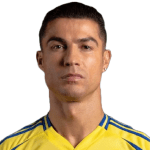
Cristiano Ronaldo
Al-Nassr


