Didier Deschamps, the architect of France's recent World Cup renaissance and one of modern football's most decorated managers, will absent himself from the dugout for his nation's final group-stage fixture following the death of his mother. The French Football Federation confirmed that the 55-year-old has returned to France to be with his family during this period of grief, a decision that underscores the human dimension often obscured by the relentless machinery of international football.
The timing places France at a crossroads both personal and professional. With a World Cup campaign in its critical phase, the absence of a manager of Deschamps' stature—a man who has guided Les Bleus to two finals in four tournaments and shaped the identity of the modern French national team—raises questions about continuity, leadership succession, and the delicate balance between duty to country and duty to family. This moment, though rooted in private sorrow, illuminates broader conversations about the demands placed upon elite football's custodians and the institutional frameworks that support them.
The Weight of Leadership in Transition


Deschamps has been the constant in French football's most successful era since the turn of the millennium. His appointment in 2012 came at a moment of institutional crisis—the team had imploded at Euro 2012, and the national programme required both tactical recalibration and cultural restoration. Over the subsequent decade, he rebuilt France into a two-time World Cup final participant, winning the trophy in 2018 and reaching another final in 2022. His tenure has been defined by meticulous preparation, psychological acuity, and an almost monastic commitment to the role.

The absence from a group-stage match, while ostensibly a single fixture, carries symbolic weight. International football operates on compressed timescales where every match carries disproportionate consequence. A group game can determine qualification trajectory, momentum, and psychological positioning for knockout football. Yet Deschamps' decision to prioritise family reflects a hierarchy that transcends sporting calculation. The French Football Federation's acceptance of this absence—without apparent institutional friction—suggests a mature recognition that even the most demanding roles must yield to human necessity.
| # | Team | P | GD | Pts |
|---|---|---|---|---|
| 1 | 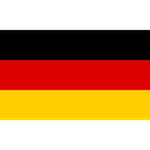 | 3 | +6 | 7 |
| 1 | 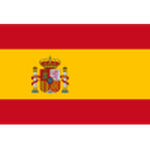 | 3 | +5 | 9 |
| 1 |  | 3 | +1 | 5 |
| 1 |  | 3 | +2 | 6 |
| 1 |  | 3 | +1 | 4 |
| 2 | | 3 | +1 | 5 |
His deputy will assume temporary charge, a transition that tests both the depth of France's coaching infrastructure and the resilience of a squad accustomed to operating under Deschamps' specific methodological framework. The question is not whether France can win a group match without their manager present, but whether the disruption to established patterns and communication channels might introduce friction at a moment when cohesion is paramount.
Institutional Responsibility and Player Welfare
The broader context here extends beyond a single manager's personal circumstances. International football has long been criticised for its relentless scheduling and the toll it exacts on players, staff, and their families. Managers operate under extraordinary pressure—the scrutiny is constant, the margins for error microscopic, and the emotional investment total. Deschamps, in particular, has been a figure of almost monastic dedication, his entire adult life subordinated to the demands of elite football.
The French Football Federation's handling of this situation—permitting the manager to step away without apparent controversy or institutional pressure—sets a precedent worth noting. It acknowledges that even in the context of a World Cup campaign, human dignity and family obligation supersede the machinery of sport. This is not a trivial concession in an environment where every decision is scrutinised and every absence questioned.
For the players, Deschamps' absence might paradoxically serve as a clarifying moment. A squad of this calibre—containing multiple Ballon d'Or winners and players from Europe's elite clubs—possesses sufficient autonomy and experience to function without constant managerial direction for a single match. The temporary leadership change may even provide psychological relief, a brief respite from the intensity that Deschamps' presence invariably generates. Yet it also removes the tactical certainty and psychological anchor that has defined French football under his stewardship.
The Succession Question Looms Larger
This moment, though rooted in immediate tragedy, inevitably raises the longer-term question of succession. Deschamps is 55 and has been in post for over a decade. While there is no suggestion of imminent departure, the institutional reality is that French football must eventually contemplate life after him. His absence, however temporary, provides a glimpse of that transition and tests the robustness of the structures beneath him.
The French Football Federation will have observed how the squad responds to interim leadership, how tactical adjustments are received, and whether the institutional knowledge embedded in Deschamps' system proves portable or personality-dependent. These observations will inform future planning, even if they remain unspoken. The federation's handling of this situation—calm, respectful, and operationally competent—suggests that contingency planning is already embedded in the organisation's thinking.
For Deschamps himself, this interruption to his World Cup campaign represents a rare moment of forced perspective. The intensity of international football can obscure the reality that managers, like players, are human beings with lives and obligations beyond the pitch. His decision to prioritise family reflects a maturity and clarity of values that, while perhaps obvious in principle, is often obscured by the competitive intensity of elite sport.
What Comes Next for France
France's group-stage finale will proceed without its manager present, a logistical and psychological adjustment that the squad must navigate with professionalism and focus. The temporary leadership will need to maintain tactical coherence while respecting the established patterns that have made France formidable. Success in this match is not in doubt—France possesses the quality to advance regardless of managerial presence—but the manner of that success will carry meaning.
Deschamps' return to the dugout for knockout football, should France progress, will mark a symbolic restoration of continuity. The question then becomes whether this interruption has altered anything substantive about the team's trajectory or merely provided a brief, human interlude in an otherwise relentless campaign. The answer will likely emerge only in retrospect, once the tournament's outcome is determined and the full narrative arc becomes visible.


