Morocco's resurgence as a footballing force has been one of the most compelling narratives of recent international football. Following their remarkable run to the World Cup semi-finals in Qatar, the North African nation has maintained momentum and relevance on the world stage—a feat that typically eludes teams after such campaigns. Yet beyond the established names who captured global attention during that tournament, a new generation of Moroccan talent is emerging, and European scouts have begun to focus intently on one teenager in particular: Ayyoub Bouaddi. The 17-year-old has become the subject of serious interest from some of Europe's most prestigious clubs, a development that speaks both to his individual brilliance and to Morocco's deepening pipeline of young talent. Understanding why Bouaddi has attracted such attention requires examining his playing profile, the broader context of Moroccan football's trajectory, and what his potential rise might mean for both his domestic league and the continent's competitive balance.
The Moroccan Moment and Youth Development
Morocco's 2022 World Cup campaign fundamentally altered perceptions of North African football on the global stage. Reaching the semi-finals—a first for any African nation—was not merely a sporting achievement; it was a validation of the country's footballing infrastructure, coaching philosophy, and player development systems. That success, however, was built largely on established players in their late twenties and early thirties. What has become increasingly clear in the months and years following Qatar is that Morocco's football federation and domestic clubs have invested heavily in youth academies and talent identification programmes. The emergence of Bouaddi is not an isolated phenomenon but rather symptomatic of a broader institutional commitment to nurturing the next generation.

The Moroccan league, while not competing at the level of Europe's "Big Five," has become a more attractive destination for young talent development. Clubs like Raja Casablanca and Wydad Casablanca have modernised their youth structures, and the national team's recent success has created a clear pathway for promising teenagers to envision themselves wearing the red shirt at major tournaments. Bouaddi's rise through the ranks has occurred within this context of optimism and structural improvement. His emergence suggests that Morocco's World Cup success was not a one-off achievement but potentially the beginning of a sustained period of competitive strength. For European clubs, this makes Moroccan talent increasingly valuable—not just as finished products, but as young players with clear development trajectories and international pedigree.
Technical Profile and Playing Style
While detailed match analysis requires direct observation, Bouaddi's appeal to elite European clubs typically centres on attributes that modern football increasingly prizes: technical security, positional intelligence, and the physical tools to compete at the highest level while still in his teenage years. Young players who attract interest from multiple top-six clubs across Europe generally possess a rare combination of current ability and developmental potential. The fact that Bouaddi has reached this level of scrutiny at 17 suggests he has already demonstrated competencies that distinguish him from his peer group.
The specific position and role Bouaddi occupies within his club's system will significantly influence which European clubs pursue him most aggressively. Midfielders and attacking players with technical quality tend to generate the most competitive bidding wars, as they offer immediate impact potential while also fitting into the possession-based, high-pressing systems that dominate elite European football. Defenders and goalkeepers, while valuable, typically require longer adaptation periods. Bouaddi's ability to influence matches in real time, combined with his age, creates a compelling proposition for clubs willing to invest in long-term development. The teenage years are critical for establishing technical habits, decision-making patterns, and physical conditioning—elements that European academies believe they can refine and optimise more effectively than most non-European environments.
The European Recruitment Landscape and Moroccan Talent
European clubs' interest in Moroccan players has intensified considerably over the past five years, driven by both sporting success and demographic factors. Morocco's large diaspora communities across France, Spain, Belgium, and the Netherlands create natural pathways for player movement and integration. Additionally, the relative affordability of Moroccan talent compared to established European academies makes the market attractive for clubs seeking value. A teenager with genuine elite potential can often be acquired from Morocco for a fraction of what an equivalent English or Spanish prospect might command.
The competitive advantage of early acquisition is significant. Clubs that identify and sign young talent before rivals do gain several benefits: lower transfer fees, longer contract terms, and the ability to shape a player's development from a formative stage. Bouaddi's situation exemplifies this dynamic. Multiple top clubs pursuing him simultaneously suggests that scouts across Europe have independently identified him as a prospect worth substantial investment. This convergence of interest typically indicates that the player has already demonstrated abilities that transcend regional or league-specific evaluation—he has shown something that translates to the universal language of elite football. For Moroccan clubs, this creates a dilemma: retain a generational talent and risk losing him on a free transfer in a few years, or negotiate a substantial fee now and reinvest in the next cohort of prospects.
Strategic Implications for Morocco and World Cup 2026
Morocco's qualification for the 2026 World Cup—which will be co-hosted by the United States, Canada, and Mexico—is virtually assured given their continental strength and recent trajectory. The question facing the Moroccan football federation is whether Bouaddi and other emerging talents will develop within European club systems or remain rooted in domestic football. Historically, players who develop in Europe's top leagues arrive at World Cups with superior match fitness, tactical sophistication, and exposure to the highest defensive standards. This can be a decisive advantage in knockout competitions.
However, there is also a countervailing consideration: players who leave Morocco too early sometimes struggle to maintain connection with the national team's culture and playing philosophy. The balance between individual development and collective identity is delicate. If Bouaddi moves to a major European club, his trajectory will likely follow a familiar pattern: initial adaptation period, gradual integration into the first team, and eventual emergence as a regular starter by his early twenties. If he times this correctly, he could be entering his peak years precisely as Morocco prepares for 2026. Conversely, if the move is poorly managed or the club lacks patience, his development could stall. The stakes for Bouaddi personally are enormous; the stakes for Morocco's World Cup ambitions are also non-trivial.
What Comes Next
The coming months will be critical in determining Bouaddi's trajectory. If he signs with a top-six European club, the narrative will shift from "emerging prospect" to "player in development at an elite institution." His performances in reserve and youth competitions will be scrutinised intensely. Loan moves, either back to Morocco or to a mid-tier European club, may feature in his pathway to first-team football. What matters most is that he continues to develop consistently and that whichever club acquires him has a genuine plan for his integration rather than viewing him as a speculative asset. Morocco will watch closely—not just as a nation proud of producing talent, but as a team preparing for a World Cup where Bouaddi could play a significant role. The teenager's next decision will reverberate across continents.
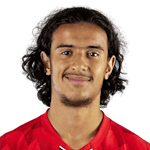
Ayyoub Bouaddi
Lille


