Haiti's qualification for the 2026 FIFA World Cup represents far more than a sporting achievement—it is a defiant assertion of national identity and collective hope in a country ravaged by gang violence, political instability, and humanitarian crisis. The Caribbean nation's first appearance at a men's World Cup in over five decades arrives at a moment when Haiti's social fabric has been torn apart by unprecedented criminal activity, kidnappings, and displacement. Yet within this darkness, the national football team has become an unlikely symbol of unity and possibility, a reminder that sport can transcend the immediate horrors of daily life and offer citizens something to believe in beyond survival. The qualification itself was hard-won, achieved through determination and resilience that mirrors the broader struggle of the Haitian people. As the team prepares for its tournament debut in North America, the stakes extend far beyond pitch performance—they encompass national morale, international visibility, and the power of football to inspire change in one of the Western Hemisphere's most troubled nations.
The Long Road Back to the World Cup Stage
Haiti's 52-year absence from the World Cup represents a generation of missed opportunities and institutional decline. The nation's last appearance came in 1974, when the team competed in West Germany during a vastly different era of Caribbean football. That tournament, though ultimately unsuccessful in terms of results, nonetheless represented Haiti's place among the world's footballing nations and offered a moment of national pride during the Duvalier regime. The intervening decades saw Haiti's football infrastructure deteriorate alongside broader state collapse—chronic underinvestment, brain drain of talented players to North American and European leagues, and the simple reality that survival often took precedence over sport. Yet the qualification for 2026 signals a reversal of that trajectory, achieved through a combination of improved governance within the Haitian Football Federation, investment in youth development, and the emergence of a generation of players with professional experience abroad. The road back has been arduous, requiring qualification through the CONCACAF pathway where Haiti had to overcome established regional rivals. This return is not merely nostalgic; it represents institutional recovery and a belief that Haiti can compete on the continental stage once more.


Gang Violence and the Paradox of Hope
The timing of Haiti's World Cup qualification is starkly paradoxical. The nation currently faces its worst security crisis in decades, with gang leaders controlling vast swathes of Port-au-Prince and other major cities. Kidnappings have become routine, hospitals have been forced to close, schools remain shuttered, and ordinary citizens navigate daily life under the threat of violence. Displacement has reached catastrophic levels, with hundreds of thousands fleeing their homes. Yet it is precisely within this context that football has assumed an outsized cultural significance. Gang leaders themselves, according to reports from those working on the ground, are football enthusiasts—a detail that speaks to the sport's universal appeal and its capacity to transcend even the most fractured social hierarchies. The national team's success offers a counternarrative to the violence that dominates headlines: proof that Haiti can still produce excellence, that young Haitians can achieve on the world stage, and that the nation's identity extends beyond gang warfare and state failure. For supporters, watching their team qualify for the World Cup provided moments of genuine joy and collective catharsis—rare commodities in contemporary Haiti. This does not diminish the severity of the crisis, but rather illustrates how sport can coexist with tragedy, offering psychological respite and a vision of national possibility even when material conditions are dire.
| # | Team | P | GD | Pts |
|---|---|---|---|---|
| 1 |  | 6 | +5 | 12 |
| 1 | 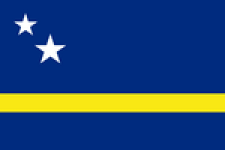 | 6 | +10 | 12 |
| 1 | | 6 | +3 | 11 |
| 2 |  | 6 | +3 | 9 |
| 2 |  | 6 | +8 | 11 |
The Diplomatic and Soft Power Dimension
Haiti's World Cup appearance carries diplomatic weight that extends beyond football. The nation has been largely isolated on the international stage, viewed primarily through the lens of crisis and dysfunction. A competitive showing at the 2026 World Cup would reshape global perceptions of Haiti, demonstrating that the country possesses institutional capacity, talented individuals, and organizational capability. For a nation whose international image has been dominated by negative headlines—natural disasters, political violence, gang activity—the World Cup offers a platform to present an alternative narrative. Players representing Haiti on football's biggest stage become ambassadors, embodying national resilience and aspiration. The tournament also provides an opportunity for Haiti to attract investment and attention to its football infrastructure, potentially catalysing broader development initiatives. International media coverage of the team will inevitably include contextual reporting on Haiti's current situation, offering a chance to humanize the nation beyond stereotypes of poverty and violence. Furthermore, qualification itself has already strengthened the hand of those within Haiti advocating for institutional reform and security improvements—the World Cup becomes a deadline, a concrete goal that demands stability and investment in the present.
What Success Looks Like Beyond the Pitch
For Haiti, success at the 2026 World Cup cannot be measured solely by wins and losses, though competitive performances would certainly matter. The primary victory has already been achieved: qualification itself, and the restoration of Haiti's place in world football after more than half a century. The tournament will be judged by whether the team can compete respectably against established nations, whether young Haitian players gain exposure that enhances their career prospects, and whether the experience strengthens the institutional foundations of Haitian football for the long term. Beyond metrics, success means that Haitians at home and in the diaspora have a focal point for national pride, a reason to gather and celebrate together despite the violence and hardship surrounding them. It means that young people in Haiti can envision futures that include professional football, that talent development pathways become clearer, and that investment in the sport continues. The World Cup also offers a moment for Haiti to demonstrate to itself and the world that it is more than its current crisis—that beneath the headlines of gang violence and state collapse, there exists institutional capacity, human talent, and national will.
As Haiti prepares for 2026, the football world should recognize that this team carries significance that transcends sport. Their qualification is an achievement born of genuine adversity, their participation a statement of national resilience. The matches themselves will matter, but the deeper story—of a nation using football as a vehicle for hope and unity amid profound crisis—is what will endure long after the final whistle.


