The Iran national football team arrives at the World Cup stage not merely as competitors seeking glory, but as representatives navigating a uniquely fraught political and logistical landscape. Head coach Amir Ghalenoei's assertion that his side are "the most oppressed in the World Cup" following last-minute travel restrictions cuts to the heart of a broader reality: Iran's participation in global football tournaments has become inseparable from geopolitical tension, diplomatic friction, and the practical complications that flow from international isolation. While other nations prepare for matches with the standard concerns of squad fitness and tactical preparation, Iran must contend with bureaucratic obstacles, restricted movement, and the weight of representing a nation whose government faces widespread international sanctions and diplomatic estrangement. Ghalenoei's candid framing—however provocative it may sound to neutral observers—reflects a genuine operational disadvantage that extends far beyond the pitch. Understanding what Iran faces requires examining not just the immediate travel restrictions, but the systemic pressures that have made their World Cup participation a test of resilience as much as footballing ability.
The Mechanics of Restriction and Their Competitive Impact
Travel restrictions imposed on national teams are rarely arbitrary; they typically emerge from visa complications, security protocols, or diplomatic channels that reflect broader state-to-state relations. In Iran's case, the timing—last-minute restrictions that force logistical scrambling weeks before or during tournament play—creates a cascading series of disadvantages that teams from more diplomatically integrated nations simply do not face. When a squad cannot move freely between training bases and match venues, when players and staff face uncertainty about their ability to travel to fixtures, the psychological toll compounds the practical one. Preparation routines become fragmented. Recovery protocols may be disrupted. The coaching staff's ability to scout opponents or conduct reconnaissance becomes compromised. These are not trivial matters in modern football, where marginal gains in preparation and information asymmetry can determine outcomes in tightly contested matches. Other World Cup participants enjoy the assumption of frictionless movement; Iran must budget time and resources for contingency planning around restrictions that may materialize with little notice. This structural disadvantage—one that no amount of tactical acumen or player quality can fully overcome—is what Ghalenoei appears to be articulating when he invokes the language of oppression.



Political Context and the Burden of Representation
Iran's relationship with international football tournaments has long been shadowed by the nation's broader geopolitical isolation. Sanctions regimes, diplomatic tensions with Western powers, and the Islamic Republic's own domestic political dynamics create an environment in which the national team functions as something more than a sporting entity—it becomes a symbol, a proxy, a statement. Players and coaching staff carry the weight of representing a nation that many Western governments view with suspicion or hostility. This representational burden is distinct from the experience of players from other nations, even those from countries with fraught international relations. When an Iranian player takes the pitch, he does so knowing that his performance will be interpreted through multiple lenses: as a footballer, certainly, but also as a representative of a state whose legitimacy and conduct are contested globally. Ghalenoei's comments suggest an awareness that this symbolic dimension intersects with the practical obstacles his team faces. The restrictions are not merely inconvenient; they are emblematic of a broader pattern of exclusion and constraint. For a coach seeking to build team cohesion and focus, this context is inescapable. It shapes how players perceive their mission, how they process setbacks, and how they interpret the obstacles placed before them.
| # | Team | P | GD | Pts |
|---|---|---|---|---|
| 1 |  | 2 | +1 | 4 |
| 1 | 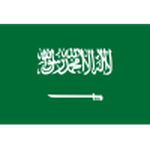 | 2 | +1 | 4 |
| 2 | 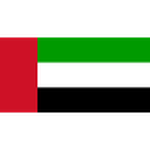 | 2 | 0 | 3 |
| 2 |  | 2 | +1 | 4 |
| 3 |  | 2 | -1 | 1 |
Comparative Disadvantage in Tournament Preparation
The World Cup is a tournament where preparation intensity and consistency separate elite performances from mediocre ones. Teams with stable, uninterrupted preparation windows can build tactical coherence, develop understanding between players, and establish the rhythms necessary for peak performance under pressure. Iran's travel restrictions undermine this foundational requirement. Consider the contrast with established footballing nations: France, England, Germany, and Brazil can move their squads, conduct training camps, and execute pre-tournament plans with the assumption of logistical stability. Their coaching staffs can focus entirely on football matters. Iran's coaching staff must simultaneously manage football preparation and navigate bureaucratic and diplomatic obstacles. This division of attention and resources is a genuine competitive disadvantage. It is not insurmountable—determination and tactical discipline can compensate for many things—but it is real, measurable, and quantifiable in terms of preparation hours lost, training sessions disrupted, or scouting opportunities foregone. Ghalenoei's frustration, then, is not merely rhetorical posturing; it reflects a legitimate operational reality that affects his team's capacity to compete on equal terms with nations that do not face comparable restrictions.
The Broader Question of Fair Competition
Ghalenoei's invocation of oppression raises a deeper question about what fair competition means in a tournament that brings together nations with vastly different geopolitical standings and international relationships. The World Cup is ostensibly a level playing field where success is determined by talent, preparation, and execution. Yet the conditions under which teams prepare and compete are demonstrably unequal. Some nations enjoy visa-free movement, stable diplomatic relations with host countries, and the assumption of unimpeded access to training facilities and match venues. Others do not. Iran's situation is an extreme case, but it illuminates a structural reality: the World Cup, for all its universalist rhetoric, operates within a geopolitical context that advantages some nations and constrains others. Whether one agrees with Ghalenoei's characterization of his team as "most oppressed" may depend on one's perspective, but the underlying claim—that Iran faces obstacles that other teams do not—is difficult to dispute. This raises uncomfortable questions for FIFA and tournament organizers about whether the competition can truly be called fair when participation itself is mediated by factors entirely external to football.
What Lies Ahead for Iran
As Iran prepares for their World Cup campaign, Ghalenoei's public statements serve multiple purposes: they articulate genuine grievances, they rally his squad around a narrative of adversity overcome, and they signal to the international football community that Iran's participation should not be taken for granted. The team will take the pitch knowing that they face not only their opponents but also a set of logistical and political constraints that their rivals do not. Whether this becomes a source of motivation or a persistent distraction will likely determine their tournament trajectory. The coming weeks will reveal whether Iran can channel Ghalenoei's defiant framing into performances that transcend the circumstances surrounding their participation. For observers, the question is whether the football world will acknowledge the structural inequalities that shape competition, or whether Iran's struggles will be attributed solely to talent and preparation gaps. Ghalenoei has ensured that the conversation extends beyond the pitch—a necessary step, perhaps, in making visible the pressures that remain largely invisible to those accustomed to unimpeded participation in global sport.


