The Iran national football team arrives at the World Cup stage not merely as competitors seeking glory, but as representatives navigating a uniquely fraught political and logistical landscape. Unlike their peers across the tournament, Iran's players and coaching staff operate under conditions of profound isolation—diplomatic, infrastructural, and psychological. Head coach Amir Ghalenoei has become the public face of a squad attempting to compartmentalise the weight of geopolitical tension, international sanctions, and domestic expectation into a singular focus: competitive football. The stakes extend far beyond three points and goal difference. For Iran, the World Cup represents a rare global platform where sport and statecraft collide with particular intensity, where every match carries symbolic weight, and where the simple act of preparing for a tournament becomes an exercise in resilience against systemic constraint.
The Isolation Framework: Beyond Conventional Disadvantage
Iran's position within the World Cup ecosystem differs fundamentally from even the most resource-constrained nations. The country faces multilayered isolation that transcends the typical challenges of smaller federations or emerging footballing nations. International sanctions restrict financial flows, limiting the ability to secure premium training facilities, hire world-class support staff, or conduct extensive pre-tournament preparation camps in neutral venues. Unlike European or South American federations with established networks of scouts, analysts, and coaching consultants, Iran's technical infrastructure operates within a constrained sphere, reliant on domestic expertise and occasional partnerships with sympathetic nations.





This isolation extends to the logistical realm. Travel restrictions, banking complications, and diplomatic tensions mean that Iran cannot access the same ecosystem of preparation that wealthier nations take for granted. Scouting missions become complicated; friendly matches against elite opposition are harder to arrange; even the simple matter of securing visas for support staff involves bureaucratic friction unknown to most World Cup delegations. Ghalenoei and his team must work within these constraints not as temporary inconveniences but as permanent features of their operational reality. The psychological toll of this environment—the constant awareness that external forces beyond football are shaping your preparation—cannot be underestimated.
Ghalenoei's Tactical Philosophy: Pragmatism Under Pressure
| # | Team | P | GD | Pts |
|---|---|---|---|---|
| 1 |  | 2 | +1 | 4 |
| 1 |  | 2 | +1 | 4 |
| 2 | 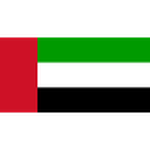 | 2 | 0 | 3 |
| 2 |  | 2 | +1 | 4 |
| 3 |  | 2 | -1 | 1 |
Amir Ghalenoei's appointment as Iran's head coach represented a statement of intent toward pragmatic, defensively-organised football. His tactical approach prioritises structural solidity and counter-attacking efficiency over the expansive, possession-dominant football favoured by wealthier nations with deeper squads. This is not merely a stylistic choice but a rational response to Iran's constraints. With limited access to elite-level opposition in preparation, Ghalenoei has built a system designed to minimise exposure to the kind of high-intensity, technically-demanding football that characterises modern World Cup competition.
The coach's defiance—evident in his public statements and team selections—manifests as an unwillingness to apologise for Iran's circumstances or to adopt a victim narrative. Instead, Ghalenoei has framed the team's challenge as one of maximising available resources and executing a clear, disciplined gameplan. This approach has historical precedent: smaller nations have repeatedly punched above their weight at World Cups through defensive organisation and set-piece efficiency. Iran's squad, built around experienced domestic league players and a handful of European-based talents, is constructed to implement this philosophy. The defiance lies not in denying reality but in refusing to be diminished by it—in insisting that Iran can compete on the World Cup stage through intelligence, organisation, and collective commitment rather than individual brilliance or financial advantage.
The Domestic Expectation Paradox
Iran's football culture carries expectations that sit uneasily alongside the team's objective constraints. The nation has a substantial domestic league, a passionate fanbase, and a historical record of competitive football at continental level. Yet the gap between domestic expectation and international reality has widened considerably. Supporters and media outlets expect Iran to progress from group stages, to compete with established footballing nations, to represent their country with distinction. These expectations are not unreasonable in isolation—they reflect the legitimate pride of a football-loving nation—but they collide with the material reality of isolation and resource constraint.
Ghalenoei must navigate this paradox with considerable diplomatic skill. Public statements must acknowledge the nation's footballing ambitions whilst remaining realistic about the obstacles. The coach cannot simply tell supporters that Iran lacks the resources of France or Germany; such candour would be politically and culturally untenable. Instead, he frames the challenge as one of character, organisation, and collective will—narratives that resonate domestically whilst maintaining the psychological confidence necessary for competitive performance. This balancing act, performed constantly across media appearances and team talks, represents a form of defiance in itself: the refusal to surrender to external narratives of inevitability or inferiority.
International Dynamics and Symbolic Significance
Iran's World Cup participation carries symbolic weight that extends beyond football. The tournament provides a rare platform for the nation to present itself on a genuinely global stage, to demonstrate capability and organisation, to challenge external stereotypes through the universal language of sport. Conversely, every setback becomes magnified, every defeat interpreted through political lenses, every tactical decision scrutinised for hidden meaning. This symbolic dimension adds psychological pressure that most nations never experience.
The international football community's relationship with Iran remains complicated. Some nations and federations maintain cordial relations; others maintain distance. Iran's players based in European leagues navigate their own complexities—representing their country whilst operating within clubs and leagues that may themselves face political sensitivities. Ghalenoei's defiance, in this context, involves maintaining focus on football whilst acknowledging that Iran's participation itself constitutes a form of resistance against isolation. The team's presence at the World Cup, their preparation, their competitive effort—these become statements of national persistence and footballing legitimacy.
Looking Forward: The Tournament as Test and Testament
As Iran prepares for group-stage competition, the true measure of Ghalenoei's tenure will emerge through performance under pressure. The coach has built a team designed to be difficult to break down, to create opportunities through transitions, to compete through organisation rather than individual flair. Whether this approach yields results remains uncertain—World Cups are unpredictable, and Iran faces established opponents with superior resources and preparation advantages.
Yet the narrative extends beyond wins and losses. Iran's World Cup campaign will be scrutinised as a test of whether a nation operating under significant constraint can still compete with distinction, whether Ghalenoei's pragmatic philosophy can yield results, whether the team can channel domestic expectation into focused performance. The coming weeks will reveal whether defiance translates into points, whether isolation breeds resilience or brittleness, whether Iran can write a story of footballing achievement against the odds. For a nation and a coach operating at the margins of global football's elite infrastructure, the World Cup represents both challenge and opportunity—a chance to prove that football, ultimately, remains a game where intelligence, organisation, and collective commitment can still matter.


