The intersection of sport and social activism has rarely felt more fraught than it does ahead of Iran's Group G encounter with Egypt in Seattle, where rainbow flags will inevitably dot the stands and where the Iranian coaching staff has already signalled its unwillingness to engage with Pride Month celebrations. This is not merely a fixture between two regional rivals; it is a collision between the values embedded in American sporting culture, the commercial machinery of FIFA's World Cup, and the deeply conservative political and religious frameworks that govern Iran's national team and broader society. The refusal to discuss Pride represents something far more significant than a coach dodging an awkward question—it reflects the impossible position in which players and staff from nations with restrictive LGBTQ+ laws find themselves when competing on the world's biggest stage, hosted by a country where such celebrations are mainstream and legally protected.
The Geopolitical Weight of a Friendly Rainbow
Iran's reluctance to acknowledge Pride celebrations speaks to a governance structure in which homosexuality remains criminalized and where public displays of LGBTQ+ solidarity carry genuine legal and social consequences for citizens back home. The Iranian coaching staff's refusal to discuss the matter is not, in isolation, unusual—many nations with similar legal frameworks have adopted a similar posture of deflection when confronted with Pride initiatives at international tournaments. What makes this moment distinctive is the venue: Seattle, a city with one of North America's most visible and politically organized LGBTQ+ communities, and the United States, where Pride has become not merely tolerated but actively celebrated by major corporations and sporting institutions. The cognitive dissonance is intentional and unavoidable. FIFA's stated commitment to inclusion and diversity sits uneasily alongside its willingness to stage tournaments in nations where such principles are not merely absent but actively opposed by law. Iran's team finds itself caught in that contradiction, and their silence is, paradoxically, the loudest possible statement.


The broader context matters enormously here. Iran's government has long used sport as a tool of national pride and soft power, yet that same government maintains laws that criminalize same-sex relationships and restrict freedom of expression around gender and sexuality. When an Iranian coach is asked about Pride celebrations, he is not being asked a simple question about flags or ceremonies; he is being asked to navigate a minefield of domestic political pressure, international scrutiny, and the safety of his own citizens. The refusal to engage is, in that sense, a rational response to an impossible situation—one created not by the coach or players, but by the structural contradictions inherent in global football governance.
Egypt's Complicated Position in the Same Conversation
| # | Team | P | GD | Pts |
|---|---|---|---|---|
| 1 | 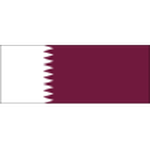 | 2 | +1 | 4 |
| 1 | 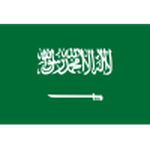 | 2 | +1 | 4 |
| 2 | 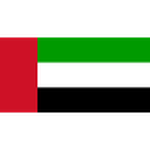 | 2 | 0 | 3 |
| 2 |  | 2 | +1 | 4 |
| 3 |  | 2 | -1 | 1 |
Egypt, Iran's opponent in this fixture, occupies a similarly fraught position, though with different historical and political contours. Egypt's legal framework also criminalizes same-sex conduct, and the country has seen high-profile arrests and prosecutions of LGBTQ+ individuals in recent years, often framed through the lens of "debauchery" laws. Yet Egypt's relationship with international sporting norms is somewhat more fluid than Iran's, partly because of its longer history of engagement with Western institutions and partly because of the sheer size and diversity of its population and diaspora. An Egyptian coach might be more likely to offer a diplomatic non-answer than an outright refusal, but the underlying discomfort would be identical. Both nations are being asked, implicitly, to endorse or at least tolerate a celebration of identities that their own legal systems criminalize. The fact that this is happening in a World Cup context—the sport's most visible and commercially significant stage—only amplifies the tension.
What is particularly striking is that neither Iran nor Egypt can simply opt out of this conversation. They are competing in a tournament hosted by the United States, where Pride Month is observed across major institutions, and where the visibility of LGBTQ+ athletes and supporters has grown substantially over the past decade. The World Cup, for all its global reach, is still fundamentally shaped by the values and norms of its host nation. That creates an inherent asymmetry: teams from nations with restrictive laws are expected to compete in an environment where those restrictions are not merely absent but actively contradicted by the surrounding culture. It is a tension that FIFA has never adequately resolved, and one that will likely intensify as the tournament progresses.
What the Silence Reveals About FIFA's Contradictions
FIFA's own position on LGBTQ+ inclusion has evolved considerably over the past decade, with the organization making increasingly explicit commitments to diversity and anti-discrimination. Yet those commitments have consistently collided with FIFA's willingness to award tournaments to nations with poor human rights records, including those with laws criminalizing same-sex conduct. The decision to stage the 2022 World Cup in Qatar, a nation with severe restrictions on LGBTQ+ rights, exemplified this contradiction most starkly. The 2026 tournament in the United States represents a different kind of tension: not a host nation with restrictive laws, but a host nation whose values around LGBTQ+ inclusion are fundamentally at odds with those of several competing nations.
The Iranian coaching staff's refusal to discuss Pride is, in that context, a form of resistance to what they may perceive as cultural imperialism—the imposition of American values onto a global stage. Whether or not one sympathizes with that framing, it reflects a real and legitimate tension within international sport. FIFA cannot simultaneously claim to champion LGBTQ+ inclusion and welcome nations whose governments actively persecute LGBTQ+ people. The organization has chosen, implicitly, to prioritize the latter—to include all nations regardless of their domestic laws—while also celebrating Pride. That contradiction is not the fault of Iran's coaching staff, but it is a contradiction they are forced to embody and navigate.
The Players Caught in the Middle
The most human dimension of this standoff involves the players themselves, many of whom may hold personal views that diverge sharply from their government's official position, but who are constrained by the political and social pressures of representing their nation on the world stage. Some Iranian and Egyptian players may be LGBTQ+ themselves, living under the constant threat of legal persecution or social ostracism. Others may be allies who privately support LGBTQ+ rights but feel unable to say so publicly without jeopardizing their careers or their families' safety. The refusal of the coaching staff to engage with Pride celebrations, while politically understandable, also silences those voices and reinforces the notion that LGBTQ+ inclusion is a Western imposition rather than a universal human right.
This is where the stakes become genuinely human rather than merely political. Football has long been a space where marginalized communities have found belonging and expression, yet it has also been a space where homophobia and transphobia have been deeply entrenched. The presence of rainbow flags in Seattle represents progress in some contexts and an unwelcome intrusion in others. The silence from Iran's coaching staff, while a rational response to an impossible situation, also represents a missed opportunity—however fraught—to acknowledge the humanity and dignity of LGBTQ+ people, including those within Iran itself.
What Comes Next: The Broader Tournament and Beyond
As the World Cup progresses, similar tensions will inevitably arise. Other nations with restrictive LGBTQ+ laws will face similar questions and similar pressures. The question is not whether these tensions will emerge, but how FIFA, host nations, and the global football community will choose to navigate them. Will there be space for genuine dialogue about the contradictions inherent in global sport, or will the conversation remain trapped in cycles of refusal and accusation? Will players and coaches from nations with restrictive laws be given the space to evolve their positions, or will they be further entrenched by the perception of external pressure?
The Iran-Egypt match in Seattle will be decided by goals and tactics, but it will also be read, by many, as a statement about the place of LGBTQ+ inclusion in global football. That is an unfair burden to place on a sporting fixture, yet it is one that the structural contradictions of international sport have created. What happens in the stands, in the media coverage, and in the responses from both teams will matter far beyond the ninety minutes of play. The rainbow flags will be there; the question is whether they will be met with engagement or silence, and what that silence will mean for the future of football as a genuinely inclusive global game.


