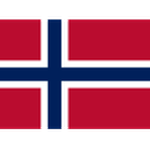
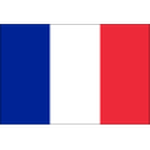
France and Norway meet on Friday at Boston Stadium in a fixture that, on paper, pits two of modern football's most devastating attacking talents directly against one another. Yet the narrative framing—Mbappe versus Haaland as rival forces—obscures a more nuanced and revealing question about what each player means to their respective national teams. This is not merely a contest between two exceptional individuals; it is a study in contrasting national dependencies, tactical philosophies, and the different pressures that come with representing a World Cup-winning superpower versus a smaller footballing nation with different ambitions. The stakes for each player, and for each country, are fundamentally asymmetrical in ways that complicate any simple comparison of importance.
SPX Win Probability — locked
Pre-kickoff probabilities are a Premium feature — free for signed-in members during the World Cup launch. SHA256-stamped before kickoff; no bookmaker odds used (F17).
Sign in to unlockThe Architecture of French Reliance
France's relationship with Kylian Mbappe has evolved into something approaching structural dependency. Since his emergence as a genuine world-class force, Mbappe has become the primary outlet through which Les Bleus generate attacking momentum, particularly in transition and in moments requiring individual brilliance to unlock a stubborn defence. The French national team, under successive managers, has been constructed with Mbappe's exceptional pace and directness as a foundational principle. Didier Deschamps' tactical setup—whether deploying a 4-3-3 or 4-2-3-1—consistently affords Mbappe the freedom to operate in wide areas or as a roaming forward, with the understanding that his ability to beat defenders one-on-one or create space through intelligent movement will generate chances that others cannot.





This reliance extends beyond mere tactical positioning. France's midfield, while competent, has not consistently produced the kind of creative dominance that would allow the team to control matches through possession and intricate passing patterns alone. Instead, the French approach has increasingly become one of controlled chaos—solid defensive organisation, quick transitions, and the explosive finishing power of Mbappe to convert half-chances into goals. In World Cup campaigns and European Championships, Mbappe's presence has often been the difference between a functional team and a genuinely threatening one. His importance is not incidental; it is foundational to how France competes at the highest level.
Haaland's Role Within Norwegian Constraints
Erling Haaland's significance to Norway, by contrast, operates within a fundamentally different context. Norway, despite producing exceptional individual talents, has not qualified for a World Cup since 1998 and has never won a major tournament. The national team's ambitions are necessarily more modest: qualification for major tournaments, competitive performances in qualifying rounds, and the development of a sustainable competitive culture. Haaland is undoubtedly Norway's most important attacking asset—his goal-scoring record at club level is extraordinary, and his physical and technical attributes make him a constant threat. Yet Norway's national team structure does not depend on Haaland in the same existential way that France depends on Mbappe.
Norwegian football has historically built its identity around collective organisation, work rate, and tactical discipline rather than individual brilliance. Haaland is a superb addition to that framework, but he is not the framework itself. Norway's hopes rest on building a cohesive unit capable of competing in qualifying campaigns; Haaland's role is to provide the cutting edge to that unit, not to carry the entire attacking burden. This is not to diminish his importance—any national team would be significantly weakened by his absence—but rather to acknowledge that the structural weight placed upon his shoulders is different in kind from that placed upon Mbappe's.
Tactical Interdependence and Systemic Vulnerability
The difference in importance becomes clearer when examining how each team functions without their star forward. France, in recent years, has struggled to generate consistent attacking threat when Mbappe is unavailable or ineffective. The team's alternative attacking options—whether Olivier Giroud, Antoine Griezmann, or younger prospects—are competent but lack the transformative quality that Mbappe brings. This creates a vulnerability: if Mbappe is marked out of a match or suffers an off day, France's attacking output often diminishes dramatically. The team has not developed sufficient redundancy in its attacking play to compensate for his absence.
Norway, meanwhile, has built a more distributed attacking model. While Haaland is the primary goal threat, the team's ability to create chances and maintain competitive intensity does not collapse entirely if he is unavailable. Norwegian football culture emphasises collective responsibility and tactical solidity; individual players, however talented, are understood as components of a larger system rather than as the system itself. This philosophical difference reflects broader national footballing traditions and the different pressures facing a World Cup-winning nation versus a smaller country still seeking to establish itself at the highest level.
The Pressure of Expectation and National Narrative
There is also a crucial psychological and narrative dimension to consider. Mbappe plays for a nation that expects to win major tournaments. France's recent World Cup victory in 2018, and their runner-up finish in 2022, have established an expectation of excellence that permeates the entire programme. Mbappe, as the team's most dynamic attacking talent, carries a significant portion of that expectation. Every match is scrutinised through the lens of World Cup preparation; every performance is evaluated against the standard of previous French teams. The pressure is immense and unrelenting.
Haaland, by contrast, plays for a nation that is still working towards consistent qualification for major tournaments. The pressure is different in character—it is the pressure of building something, of establishing Norway as a competitive force, rather than the pressure of maintaining or exceeding a legacy of success. This does not make Haaland's role less important in absolute terms, but it does mean that the weight of national expectation rests less heavily on his individual shoulders. Norway's supporters and media understand that the team's development is a longer-term project; Haaland is a crucial part of that project, but not its sole foundation.
Looking Forward: Friday's Encounter and Beyond
When France and Norway meet on Friday, the match will inevitably be framed as a Mbappe-Haaland duel. Yet the deeper story is about two players operating within radically different national contexts, carrying different kinds of importance, and representing different footballing philosophies. Mbappe's performance will likely be scrutinised as a barometer of France's attacking threat and their trajectory towards 2026. Haaland's contribution will be evaluated within Norway's broader qualifying campaign and their development as a competitive unit.
The question of who is "more important" ultimately depends on how one defines importance. In terms of structural reliance and the gap between a team's performance with and without them, Mbappe's importance to France is arguably greater. Yet in terms of individual quality and the ability to change a match single-handedly, both players are among the finest in world football. What Friday's match will reveal is not which player is superior, but rather how each operates within the distinct pressures and possibilities of their national context. That distinction matters far more than any simple ranking.

