Morocco face France in a 2026 World Cup quarter-final on Thursday with genuine ambitions of reaching the semi-finals for a second consecutive tournament. The Atlas Lions have emerged as one of international football's most compelling narratives over the past eighteen months—a team that has transcended the traditional hierarchy of African football and begun to challenge the established order at the global stage. This quarter-final represents far more than a single knockout tie; it is a referendum on whether Morocco's recent ascent represents a sustainable shift in their competitive standing or a fleeting moment of overperformance.
The phrase "this oxygen is spreading" encapsulates the philosophy driving Morocco's transformation. It speaks to a cultural momentum, a belief system permeating the squad and the nation, that excellence is no longer a distant aspiration but an achievable reality. For a country that reached the World Cup semi-finals in 2022—their first appearance in that stage since 1986—the psychological barrier has been shattered. What was once considered a miracle run has become the baseline expectation. Yet facing France, a nation with two World Cup titles and a semi-final appearance in 2022, represents the ultimate test of whether Morocco's oxygen truly sustains them at the highest level.
The Architecture of Morocco's Rise


Morocco's trajectory over the past two years has been methodical rather than accidental. Under their coaching structure, the team has developed a clear identity: a pressing system that suffocates opponents in midfield, a defensive shape that remains compact and disciplined, and a counter-attacking philosophy that punishes hesitation. This is not the chaotic, talent-dependent football that characterised many African nations' World Cup campaigns. Instead, it represents a European-influenced tactical framework adapted to Morocco's specific strengths—technical proficiency, athleticism, and an almost monastic commitment to collective organisation.

The 2022 World Cup semi-final loss to France, while painful, provided invaluable data. Morocco learned that they could compete with elite European sides, that their system was not fundamentally flawed, and that the gap between themselves and the world's best was measurable rather than insurmountable. That experience has been weaponised in preparation for this quarter-final. The squad has matured; players who were learning on the job in Qatar are now seasoned campaigners. The midfield, in particular, has developed a sophistication that allows Morocco to control matches against technically superior opponents.
| # | Team | P | GD | Pts |
|---|---|---|---|---|
| 1 | | 3 | +5 | 7 |
| 1 | 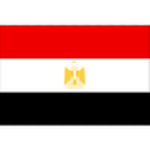 | 3 | +2 | 7 |
| 1 |  | 3 | +4 | 9 |
| 1 | 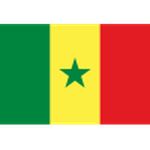 | 3 | +6 | 7 |
| 1 |  | 3 | +6 | 9 |
What distinguishes Morocco's rise from previous African World Cup campaigns is sustainability. They have not relied on a single transcendent talent or a moment of collective euphoria. Instead, they have built depth across multiple positions, developed a coherent tactical system, and created an environment where individual ambition is subordinated to collective purpose. This is the foundation upon which genuine powerhouse status is constructed.
The France Paradox: Vulnerability Beneath Prestige
France arrive as defending champions and one of the tournament's favourites, yet their path to this quarter-final has revealed vulnerabilities that Morocco will have studied exhaustively. The French squad, while still formidable, is in transition. Key players are aging; the midfield lacks the dynamism of previous cycles; and there is a sense that the golden generation that won in 2018 and reached the final in 2022 is beginning to fragment.
Morocco's task is not to outmatch France in individual quality—that remains unlikely—but to exploit the spaces created by France's transitional moment. The French defence, particularly at full-back, can be exposed by sustained pressure and intelligent movement. The midfield, while experienced, is not as dominant as it once was. And crucially, France's attacking play, while still dangerous, has become somewhat predictable. Morocco's defensive organisation, honed through countless hours of video analysis and tactical preparation, is specifically designed to neutralise the patterns that France relies upon.
The psychological dimension cannot be overlooked. France will carry the weight of expectation; Morocco will carry the liberation of being underdogs with nothing to lose. This is not a cliché but a genuine tactical and mental advantage. Teams that have nothing to lose often play with a freedom and intensity that favours their style. Morocco's pressing system, which requires relentless energy and commitment, thrives when players are unshackled by the burden of being favourites.
The Oxygen: Culture, Belief, and National Identity
The metaphor of spreading oxygen speaks to something deeper than tactical preparation or squad depth. It refers to a cultural shift within Moroccan football—a belief that excellence is not a foreign concept but an achievable destination. This mindset has permeated from the national team into the domestic league, into youth development structures, and into the consciousness of young Moroccan players who now see pathways to the world's elite clubs as realistic rather than fantastical.
This cultural momentum is tangible. When Morocco's players take the field against France, they do so representing not just a nation but a movement. The weight of expectation is real, but so is the sense that they are part of something historically significant. The 2022 semi-final was a watershed moment; this quarter-final is the moment where that watershed either becomes a permanent elevation or a temporary anomaly.
The domestic infrastructure supporting this rise has improved markedly. Moroccan clubs are increasingly competitive in African competitions; the league is attracting investment and talent; and the pathway from youth football to the national team has become more structured and professional. This is not overnight success but the result of sustained investment in systems and philosophy.
What Awaits: The Semi-Final Dream and Beyond
Should Morocco overcome France, they would face either Argentina or another elite European nation in the semi-finals. The prospect of a Moroccan team reaching back-to-back World Cup semi-finals would represent a seismic shift in global football's power dynamics. It would validate the investment in infrastructure, the tactical philosophy, and the cultural belief that has driven their rise.
Yet even in defeat, Morocco's trajectory is unlikely to be derailed. The squad is young enough that many players will feature in 2030. The systems are in place. The oxygen is spreading. What began as a remarkable run in 2022 has evolved into something more durable: a genuine challenge to the established order. France represents the ultimate test of that challenge, but regardless of Thursday's outcome, Moroccan football has already been transformed.


