The Netherlands and Morocco are poised for a decisive World Cup 2026 last-32 encounter that carries far more weight than a routine knockout fixture. Both nations arrive at this juncture with contrasting trajectories, unfinished business from recent tournaments, and genuine aspirations of a deep run. For the Dutch, it represents another opportunity to finally convert their technical superiority and attacking prowess into silverware after three final defeats across their modern history. For Morocco, a team that has emerged as Africa's most consistent World Cup performer in recent cycles, it is a chance to prove that their 2022 semi-final appearance was no fluke and that they belong among the tournament's elite. The match carries the intensity of a genuine 50-50 proposition, with both sides possessing the quality to advance and the vulnerabilities that could see them exit. This is knockout football at its most compelling: two well-matched sides with legitimate claims to progression, separated by fine margins of execution, tactical acumen, and nerve.
The Dutch Quest for Redemption
The Netherlands enters this fixture as one of world football's perennial nearly-men, a status that has become almost definitional to their modern identity. Three World Cup finals—1974, 1978, and 2010—without a trophy represents a historical injustice that has haunted Dutch football for generations. Their 2022 campaign ended in heartbreak against Argentina in the quarter-finals, a match they controlled for long stretches but ultimately lost to a side that found a way to win when it mattered most. That defeat crystallised a pattern: the Dutch possess the football, the ideas, and the individual talent, yet somehow the tournament outcomes elude them. Under their current management, they have rebuilt with a blend of experienced campaigners and emerging talent, creating a squad capable of competing with anyone. Their attacking philosophy remains unmistakably Dutch—fluid, positional, built on quick transitions and intelligent movement—but there is now a harder edge to their defensive organisation. The question that has haunted them for decades persists: can they finally translate their football into trophies? This World Cup represents perhaps their last genuine window with their current generation, making every match feel consequential.


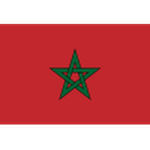
Morocco's African Ascendancy
Morocco's trajectory over the past four years has been nothing short of remarkable. Their 2022 World Cup semi-final run—the furthest any African nation has travelled in the tournament's history—fundamentally altered perceptions of what is possible for the continent's representatives. They did not stumble into that achievement through fortune; they earned it through defensive discipline, tactical intelligence, and a refusal to be intimidated by bigger names. Under their management, Morocco has developed an identity that is distinctly their own: compact, organised, difficult to break down, and dangerous on the counter-attack. They have proven capable of competing with and beating elite European sides, a psychological barrier that African teams have historically struggled to overcome. The 2026 World Cup represents a critical moment for Moroccan football. They must demonstrate that 2022 was the beginning of a sustained period of excellence rather than a one-tournament anomaly. A deep run would validate their emergence as a genuine World Cup power; an early exit would invite questions about whether they have plateaued. This match against the Netherlands is precisely the kind of fixture that defines tournaments—two sides of genuine quality, neither clear favourites, everything to play for.
| # | Team | P | GD | Pts |
|---|---|---|---|---|
| 1 | 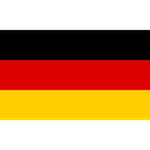 | 3 | +6 | 7 |
| 1 | 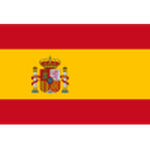 | 3 | +5 | 9 |
| 1 | 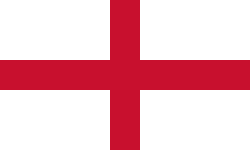 | 3 | +1 | 5 |
| 1 |  | 3 | +2 | 6 |
| 1 |  | 3 | +1 | 4 |
| 1 | | 3 | 0 | 4 |
Tactical Battleground and Key Matchups
The tactical contest between these sides will likely determine the outcome more than individual brilliance. The Netherlands will seek to dominate possession and create space through their characteristic positional play, using their full-backs as auxiliary attackers and their midfield to control tempo. Morocco, conversely, will aim to compress space, force the Dutch into rushed decisions, and exploit the transitions that inevitably emerge when the Netherlands commits numbers forward. The battle in midfield will be crucial—whoever controls that area will likely control the match. Morocco's ability to disrupt Dutch rhythm through intelligent pressing and positional discipline could prove decisive, while the Netherlands' capacity to move the ball quickly and create overloads in attacking areas represents their primary avenue to victory. Set pieces may also play a role; both sides have players capable of delivering and finishing from dead-ball situations, and in knockout football, such moments often prove decisive. The psychological dimension cannot be overlooked either. The Netherlands carry the weight of expectation and historical underachievement; Morocco carry the momentum of recent success and the belief that they belong at this level. How each side manages that mental burden will matter as much as their tactical execution.
The Broader Tournament Context
This fixture exists within the wider narrative of World Cup 2026, a tournament that promises to be more unpredictable and competitive than recent editions. The expansion to 48 teams has altered the dynamics of qualification and group-stage football, but the knockout rounds remain a ruthless meritocracy where only genuine quality survives. Both the Netherlands and Morocco have earned their place in the last 32 through legitimate qualification campaigns, and both arrive with squads capable of competing at the highest level. The emergence of Morocco as a consistent World Cup performer has implications beyond their own ambitions; it signals a shift in global football power dynamics, with African nations increasingly capable of competing with and beating traditional powerhouses. For the Netherlands, this match represents a chance to reassert their status as a genuine tournament contender rather than a side that plays beautiful football but exits prematurely. The winner of this fixture will carry momentum into the subsequent rounds, while the loser will face the familiar sting of premature elimination. In knockout football, there are no second chances, no opportunities for redemption within the tournament itself. Every decision, every moment, every execution carries absolute weight.
What Comes Next
The outcome of this Netherlands-Morocco encounter will reverberate through the remainder of the tournament. A Dutch victory would suggest they have finally found the formula to convert their football into results, potentially setting up a deeper run that could finally deliver the trophy their football deserves. A Moroccan victory would represent another statement of intent from African football and would position them as genuine contenders for the latter stages. Regardless of the result, this match promises to be a compelling examination of two different footballing philosophies and two nations with legitimate aspirations. The neutral observer should expect a tightly contested affair, decided by fine margins and moments of individual quality. Both sides will leave everything on the pitch; both sides have too much at stake to do otherwise. This is knockout football at its most compelling.
