Portugal's preparation for their upcoming fixture against Uzbekistan arrives amid an unusual storm of internal tension and external scrutiny. Cristiano Ronaldo, the nation's greatest footballer and a figure whose mere presence has long been synonymous with Portuguese ambition, finds himself in unfamiliar territory: a prolonged spell of poor form for his country, coupled with a social media backlash directed not at the veteran himself, but at his teammates. This collision of circumstances—a struggling icon, fractured team cohesion, and the unforgiving court of public opinion—presents Portugal's coaching staff with a genuine tactical and psychological puzzle. The Uzbekistan match, ostensibly a routine qualifier or friendly, has become a referendum on how a modern football nation manages the twilight years of its greatest player while maintaining collective standards and harmony.
The Form Crisis and Its Timing
Ronaldo's struggles in a Portugal shirt represent a departure from the narrative that has defined his international career. For nearly two decades, he has been the reliable heartbeat of Portuguese football—the player who could conjure a goal from nothing, whose presence alone seemed to elevate teammates, whose hunger appeared inexhaustible. Yet form, that most fickle of football currencies, has deserted him at the international level. Whether measured in goals, assists, or the broader quality of his play, his recent performances have fallen short of the standard he and the nation have come to expect. This is not a matter of injury or absence; it is a visible, measurable decline in output during matches that matter.



The timing compounds the difficulty. Portugal, as a nation with genuine World Cup and European Championship aspirations, cannot afford to carry passengers in their squad, regardless of pedigree. Every match in qualification or tournament football carries weight. The margin for error shrinks with each fixture. When a player of Ronaldo's stature underperforms, it does not simply represent one player's bad run—it raises questions about team balance, tactical flexibility, and whether the collective is being asked to compensate for individual decline. Coaches face an impossible calculus: drop the greatest player in your nation's history, or persist with him and risk compounding the problem through poor results.
The Teammate Backlash and Squad Dynamics
| # | Team | P | GD | Pts |
|---|---|---|---|---|
| 1 |  | 3 | +6 | 7 |
| 1 |  | 3 | +5 | 9 |
| 1 |  | 3 | +1 | 5 |
| 1 |  | 3 | +2 | 6 |
| 1 |  | 3 | +1 | 4 |
| 1 |  | 3 | +2 | 6 |
What makes this situation genuinely unusual is the direction of the social media criticism. Rather than the traditional narrative—fans defending Ronaldo and questioning those around him—a significant portion of Portugal's support has turned on his teammates. The accusation, implicit or explicit, is that they are not providing adequate service, not matching his intensity, or failing to create the conditions in which he might thrive. This inversion of blame reveals something deeper about squad morale and the psychological weight of playing alongside a living legend.
When teammates are publicly criticized for not supporting a struggling star, it creates a corrosive dynamic. Players may become overly conscious of their responsibility to "feed" Ronaldo, distorting their natural play and decision-making. Alternatively, resentment can fester—a sense that they are being scapegoated for circumstances beyond their control. The best teams operate with distributed responsibility and mutual accountability; when one player becomes the focal point of external pressure and internal expectation, the entire ecosystem becomes fragile. Portugal's coaching staff must navigate this minefield carefully, ensuring that the team's tactical approach serves the collective good rather than becoming a vehicle for one player's redemption.
Tactical Flexibility and System Demands
The fundamental question facing Portugal's management is whether the team's system should be built around Ronaldo or whether it should evolve beyond him. This is not a matter of sentiment but of football logic. If Ronaldo's best position and role no longer align with what the team needs tactically, then persisting with that arrangement benefits neither player nor nation. Conversely, if there is a tactical framework in which he can still contribute meaningfully, then the investment in finding it is worthwhile.
Portugal has traditionally operated with flexibility in their attacking setup, capable of shifting between formations and roles depending on opposition and personnel. The challenge now is whether Ronaldo can function effectively within a system that does not place him at the absolute centre of play. Can he operate as a secondary attacking threat? Can he contribute in a deeper role, using his experience and intelligence rather than relying on explosive athleticism? These are not rhetorical questions—they are practical considerations that will determine whether his international career can be extended productively or whether a managed transition becomes necessary. The Uzbekistan match offers a testing ground for such experimentation, a fixture where tactical adjustments can be attempted with lower stakes than a major tournament qualifier.
The Broader Narrative and Legacy Management
Beyond the immediate sporting considerations lies a question of legacy and narrative management. Ronaldo's international career has been defined by moments of transcendence and an almost mythical consistency. The prospect of it ending in a period of decline, with questions about his form and his teammates' commitment, is not the conclusion either he or Portugal would have scripted. Yet football rarely offers neat endings. The challenge for all involved—the player, the coaching staff, the federation, and the supporters—is to manage this transition with dignity and pragmatism.
There is a path forward that does not require either blind loyalty or premature retirement. It involves honest assessment, tactical adaptation, and a willingness to view Ronaldo's role as evolving rather than diminishing. Some of football's greatest players have found renewed purpose in adjusted roles during their final years. Whether Portugal can facilitate such a transition while maintaining team cohesion and competitive standards remains to be seen. The Uzbekistan fixture will provide early indicators of whether the current approach is sustainable or whether more fundamental changes are required.
What Comes Next
The match against Uzbekistan will be scrutinized far beyond its intrinsic importance. Every touch Ronaldo takes, every chance created or missed, every substitution decision will be dissected and debated. Portugal's coaching staff must resist the temptation to over-interpret a single performance while remaining alert to genuine patterns. The real test will come across a series of fixtures—whether form improves, whether team cohesion strengthens, and whether a sustainable balance can be struck between honouring a legend and building a team capable of competing at the highest level. The next few weeks will be revealing.
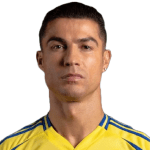
Cristiano Ronaldo
Al-Nassr

