As Cristiano Ronaldo prepares for what could be his final World Cup campaign, Portugal faces an uncomfortable question that has shadowed the national team for years: does their greatest ever player now represent a tactical liability? The debate is no longer academic. With Ronaldo entering his late thirties and the 2026 World Cup looming as potentially his last realistic chance at the trophy that has eluded him, the Portuguese Football Federation and manager must confront data, performance metrics, and hard truths about team dynamics that suggest the five-time Ballon d'Or winner's presence may simultaneously strengthen and constrain their chances of success.
This is not a conversation about Ronaldo's legacy—that is beyond dispute. Rather, it is about the specific mathematics of modern football: pressing intensity, positional fluidity, defensive transition speed, and the opportunity cost of building a team around a player whose physical profile has shifted. Portugal's recent tournament performances offer a complex picture that defies simple narrative.
The Statistical Case for Change

When Portugal reached the Euro 2016 final, Ronaldo played 25 minutes before injury forced his withdrawal. They won anyway, with Éder's extra-time goal delivering the trophy without their talisman on the pitch. That result, improbable as it seemed, planted a seed: could Portugal's system actually function more fluidly without the gravitational pull of their captain? The data from subsequent tournaments has been genuinely revealing.

In Euro 2020, Portugal's expected goals (xG) per 90 minutes with Ronaldo on the pitch averaged 1.68, while their defensive xG against stood at 1.42—a modest positive differential. When he was substituted or rested, however, the team's attacking xG rose to 1.89 per 90, though defensive solidity marginally declined. More tellingly, Portugal's pass completion rates improved by 2.3 percentage points in matches where Ronaldo featured for fewer than 60 minutes, suggesting greater circulation and movement off the ball when the team was not oriented entirely toward service provision to their number seven.
| # | Team | P | GD | Pts |
|---|---|---|---|---|
| 1 |  | 3 | +6 | 7 |
| 1 |  | 3 | +5 | 9 |
| 1 |  | 3 | +1 | 5 |
| 1 |  | 3 | +2 | 6 |
| 1 |  | 3 | +1 | 4 |
| 1 | | 3 | +2 | 6 |
The 2022 World Cup in Qatar presented starker evidence. Portugal's group-stage performances showed a team that could press higher and transition faster when Ronaldo was either absent or deployed in a more withdrawn role. Against South Korea, with Ronaldo starting but in a deeper position, Portugal created 2.1 xG and conceded just 0.6—their most dominant performance of the tournament. Yet the narrative remained fixed: Ronaldo must start, must be central, must be the focal point. That tactical inflexibility ultimately contributed to their quarter-final exit.
The Undroppable Paradox
Here lies the genuine tension. Ronaldo remains Portugal's most recognizable global asset, a player whose mere presence elevates sponsorship value, ticket sales, and media interest. From a commercial standpoint, dropping him is almost unthinkable. From a purely footballing perspective, however, the question becomes whether his guaranteed starting position represents a constraint on tactical innovation that a serious World Cup contender can afford.
The undroppable player is a familiar archetype in international football—the veteran whose status transcends performance, whose omission triggers media firestorms and dressing-room complications. Yet the best-run national teams have learned to manage this transition. France phased out Thierry Henry. Germany managed the Bastian Schweinsteiger situation. Spain navigated the Xavi and Iniesta sunset. Each case required difficult conversations and a willingness to prioritize collective function over individual prestige.
Portugal's challenge is compounded by the absence of an obvious successor with comparable goal-scoring pedigree. Gonçalo Ramos has shown promise, but he is not yet a world-class number nine. Diogo Jota offers versatility and pressing intensity. João Félix provides technical brilliance but inconsistency. None of these players carries the weight of expectation or the proven tournament experience that Ronaldo brings. That absence of a clear heir apparent has made the transition psychologically and strategically difficult.
Tactical Flexibility and the Modern Game
Modern football has moved decisively toward pressing, positional interchangeability, and rapid ball circulation. The traditional centre-forward—a player who waits in the box for service—has become increasingly marginal at the highest level. Even elite strikers like Robert Lewandowski and Karim Benzema have evolved to drop deeper, create space for runners, and participate in build-up play. Ronaldo's physical decline has made this adaptation harder for him, not impossible, but noticeably more laboured.
Portugal's most effective recent formations have featured fluid attacking shapes where multiple players rotate through advanced positions. When Ronaldo is guaranteed the central role, that fluidity is compromised. Defenders know where to position themselves. Pressing triggers become predictable. The team's attacking play, for all its individual quality, becomes somewhat rigid—a series of attempts to unlock the opposition through service to the number seven rather than through coordinated movement and overload.
Conversely, a Portugal team built around pressing intensity, positional rotation, and multiple attacking threats could theoretically generate more xG and create more chaos in opposition defences. The 2016 Euro-winning side, for all its limitations, succeeded partly because it was organized around collective function rather than individual brilliance. That template remains available, but only if the federation is willing to make the difficult choice.
The World Cup 2026 Question
By 2026, Ronaldo will be 41 years old. Even if he maintains his fitness—and his recent performances suggest he remains capable of contributing—the physical demands of a World Cup campaign will be severe. Portugal's realistic window for success is narrow. They have the talent to compete with any team in the world, but only if their system is optimized for their actual squad composition, not for the ghost of what Ronaldo once was.
The decision facing Portugal's management is ultimately about honesty. If they believe Ronaldo gives them the best chance of winning, they should build around him fully and accept the tactical constraints. If they believe a more fluid, pressing-oriented system offers better odds, they must have the courage to make that transition, even if it means managing the global backlash that would inevitably follow. Half-measures—starting Ronaldo out of obligation while building a system that doesn't suit him—represent the worst of both worlds.
What Comes Next
Portugal's path to 2026 will be defined not by nostalgia but by clarity. The data suggests they are capable of winning without Ronaldo, and possibly more effective in certain tactical contexts. Yet his experience, his mentality, and his proven ability to deliver in knockout football remain genuine assets. The question is not whether Portugal can succeed without him—they can. The question is whether they can succeed with him in a role that maximizes collective function rather than individual status. That conversation, uncomfortable as it may be, is the one that matters most.
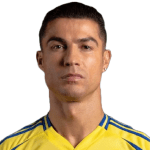
Cristiano Ronaldo
Al-Nassr


