The narrative of Cristiano Ronaldo's World Cup campaign has shifted markedly. Where once the Portuguese icon could single-handedly elevate his nation's fortunes through sheer force of will and technical mastery, he now finds himself caught in an uncomfortable limbo: too significant to drop, yet increasingly unable to deliver the decisive moments that define tournament football at its highest level. On Wednesday, as fellow superstars across the globe produced the kind of performances that tournaments are built upon, Ronaldo's inability to match that standard raised uncomfortable questions about his role in Portugal's ambitions and the broader challenge of managing ageing excellence in knockout football.
The timing is particularly acute. When elite performers elsewhere seized their opportunities with the clinical precision expected of world-class operators, Ronaldo's comparative anonymity became impossible to ignore. This is not merely about one match or one player's form; it speaks to deeper tactical and psychological tensions within international football, where reputation and reality have begun to diverge in ways that even the most decorated careers cannot entirely bridge.
The Superstar Standard and Ronaldo's Shortfall


The contrast between Ronaldo's performance and those of his contemporaries elsewhere in the tournament illuminates a fundamental truth about elite football: consistency at the highest level, particularly in World Cup environments, remains the rarest commodity. When other superstars delivered on Wednesday—producing goals, creating chances, imposing their will on proceedings—they reinforced the expectation that players of their calibre should be capable of such performances regularly. Ronaldo, by that measure, fell short.

This is not to suggest a single poor performance defines a tournament campaign or a career. Rather, it highlights the mounting pressure on ageing superstars to justify their continued prominence through output rather than reputation alone. The margin for error shrinks considerably when a player reaches his late thirties, particularly in a competition where freshness, explosive athleticism, and tactical flexibility often prove decisive. Ronaldo's struggles on Wednesday were not isolated; they reflected a broader pattern of inconsistency that has characterised his World Cup involvement, making his manager's reluctance to substitute him all the more revealing about the psychological weight such players carry within their squads.
| # | Team | P | GD | Pts |
|---|---|---|---|---|
| 1 |  | 3 | +6 | 7 |
| 1 |  | 3 | +5 | 9 |
| 1 |  | 3 | +1 | 5 |
| 1 |  | 3 | +2 | 6 |
| 1 |  | 3 | +1 | 4 |
| 1 | | 3 | +2 | 6 |
The Manager's Dilemma: Loyalty Versus Pragmatism
The observation that Portugal's coach appeared "scared to take him off" encapsulates one of modern football's most delicate management challenges. Dropping Cristiano Ronaldo is not a straightforward tactical decision; it carries enormous symbolic weight within the squad, the media ecosystem, and the broader Portuguese football culture. Ronaldo remains, by any objective measure, one of the greatest players ever to represent Portugal. His goal-scoring record, his trophy cabinet, his influence on the national team's trajectory over two decades—these are not erased by a single underwhelming performance or even a sequence of them.
Yet pragmatism in tournament football demands that managers make decisions based on current form and tactical requirements rather than historical achievement. The tension between these imperatives creates genuine difficulty. Removing Ronaldo risks demoralising the squad, inviting media criticism, and potentially fracturing the internal harmony that international teams require during intense competitions. Conversely, persisting with an underperforming player—however illustrious—can cost matches and tournaments. This is the bind that Portugal's manager faces: the player's very prominence makes him simultaneously indispensable and potentially problematic.
The broader context matters here too. Portugal's World Cup ambitions depend on collective performance, yet the presence of such a towering individual figure inevitably shapes tactical and psychological dynamics. Other players may defer to Ronaldo, either through respect or habit. The team's shape and attacking patterns may be constructed around his presence rather than optimised for the opposition at hand. These structural considerations make the decision to bench him far more consequential than it would be for a younger, less historically significant player.
Tactical Evolution and the Changing Game
International football has evolved considerably since Ronaldo's early World Cup appearances. The modern game increasingly demands pressing intensity, positional discipline, and tactical flexibility—qualities that become harder to maintain as players age, regardless of their technical brilliance. Younger superstars who delivered on Wednesday likely benefited from the physical and mental freshness that allows them to impose themselves across ninety minutes without diminishing returns.
Ronaldo's struggles may reflect not merely a dip in form but a fundamental mismatch between his current physical capabilities and the demands of contemporary tournament football. The explosive acceleration that once allowed him to create space and finish chances with devastating efficiency has inevitably diminished. His positioning and movement remain intelligent, but intelligence alone cannot compensate for the marginal losses in pace and power that accumulate across a career. This is not a criticism; it is an acknowledgment of the natural arc of athletic performance.
The tactical environment also matters. If Portugal's system is built to accommodate Ronaldo's presence—perhaps playing him in a more withdrawn role or adjusting the team's shape around him—then his underperformance becomes a collective problem rather than an individual one. Other teams may have evolved their tactical approaches more fluidly, allowing their superstars to operate in systems optimised for current conditions rather than historical precedent. This flexibility, or lack thereof, can prove decisive in tournament football.
The Broader Implications for Portugal's Campaign
Portugal's World Cup trajectory will ultimately be determined not by individual performances but by collective results and the team's ability to adapt as the tournament progresses. Ronaldo's role within that narrative remains significant, but increasingly conditional. If Portugal advances and performs well, questions about his form may fade into the background. If the team struggles, his underperformance will inevitably become a focal point for analysis and criticism.
The deeper issue concerns how Portugal balances the emotional and symbolic weight of Ronaldo's presence against the tactical and strategic requirements of modern tournament football. This is not unique to Portugal; many nations have grappled with similar questions regarding ageing superstars. The difference is that few players carry Ronaldo's historical significance or cultural importance to their national team. Managing that dynamic while maintaining competitive edge represents one of international football's most complex challenges.
Looking Ahead: The Path Forward
As Portugal's World Cup campaign continues, the question of Ronaldo's role will persist. Whether he can rediscover the form that made him indispensable, or whether the team must find ways to compete effectively with him in a reduced capacity, remains to be seen. What is clear is that the era of assuming Ronaldo will single-handedly elevate Portugal's performance has passed. The tournament will be decided by collective excellence, tactical acuity, and the ability of the entire squad to perform under pressure—qualities that no individual, however decorated, can guarantee alone.
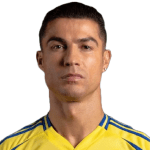
Cristiano Ronaldo
Al-Nassr


