Mohamed Salah has finally delivered the moment Egyptian football has waited for since 1930. In a performance that blended clinical finishing with creative brilliance, the Liverpool forward scored and assisted as Egypt overturned a deficit to defeat New Zealand and claim their first-ever World Cup victory. The result represents far more than three points on a group-stage scoresheet; it is a watershed moment for a nation whose football heritage has long outpaced its World Cup record, and a vindication of Salah's enduring capacity to perform on the grandest stages when his country needs him most.


Locked pre-kickoff — model v4.2
For decades, Egypt has carried the weight of unfulfilled potential at the World Cup. Despite producing some of Africa's finest players and boasting a continental trophy cabinet that rivals any nation on the continent, the Pharaohs have never won a knockout tie in the tournament's history. They have qualified five times since 1934, yet each campaign has ended in group-stage elimination or early heartbreak. That narrative—of a footballing giant perpetually undone by the World Cup's unforgiving mathematics—has haunted the national team and its supporters. Against New Zealand, however, Egypt finally broke through that psychological and competitive barrier.
The Salah Factor: Individual Brilliance in a Collective Cause

Salah's involvement in both goals underscores why he remains Egypt's most consequential player on the world stage. His goal—the margin of victory in a comeback win—demonstrated the ruthlessness that has defined his career at club level. But equally significant was his assist, a moment of creative vision that showed he remains capable of unlocking defences through intelligence and precision rather than individual dribbling alone. At an age when many elite forwards begin to see their influence wane, Salah continues to operate at a level that makes him indispensable to Egypt's ambitions.

The broader context of Salah's performance cannot be separated from the immense pressure he carries as Egypt's talisman. In a nation where football is woven into the social fabric, where the national team's fortunes shape public mood and national pride, Salah is not merely a player but a symbol of Egyptian aspiration. Every tournament, every match, carries the weight of expectation. Against New Zealand, he responded not with the burden of that pressure visible, but with the composure of a player who has learned to thrive in high-stakes environments. His dual contribution—scorer and creator—is the hallmark of a complete forward operating at his peak.
Breaking the Curse: What This Victory Means for Egyptian Football
The significance of Egypt's first World Cup win extends beyond the immediate tournament context. For a nation that has won the Africa Cup of Nations three times and produced legendary players across generations, the absence of a World Cup victory has been a conspicuous gap in the national resume. That gap has fed a narrative of underachievement, of talent squandered or circumstances conspiring against them. Now, with that first victory secured, Egypt can begin to rewrite that story.
The psychological impact cannot be overstated. Winning breaks cycles. It provides evidence that the curse—real or imagined—can be overcome. Future Egyptian teams will point to this result as proof that the World Cup is not an insurmountable obstacle, that their nation belongs among the tournament's competitive forces. For the current squad, it also provides a foundation of confidence upon which to build. Group-stage football is notoriously fragile; one victory can shift momentum, alter goal difference calculations, and transform a campaign from one of survival into one of genuine progression.
New Zealand, meanwhile, offered limited resistance to a team finally playing with the freedom that comes from breaking a long drought. The All Whites have never advanced beyond the group stage in their World Cup history, and this defeat, while disappointing, fits a pattern of their tournament struggles. For Egypt, however, the opponent mattered less than the outcome. They needed a win, they needed Salah to deliver, and both conditions were met.
Tactical Execution and the Road Ahead
Egypt's comeback victory suggests a team that has learned to manage adversity within matches. Coming from behind requires not only individual quality but also collective discipline, tactical flexibility, and the mental resilience to believe that a deficit can be erased. These are hallmarks of teams that progress deep into tournaments. Whether Egypt can sustain this level of performance across their remaining group matches will determine whether this victory proves to be a turning point or a false dawn.
The fixture list ahead will be crucial. Group-stage mathematics are unforgiving; a single defeat can undo the benefit of a win, and the quality of remaining opponents will test whether Egypt's breakthrough is genuine or circumstantial. Salah's form will remain central to their prospects. If he can maintain the standard he set against New Zealand—combining goals with creativity, leading by example, and lifting teammates through his presence—then Egypt genuinely possesses the tools to progress. If, conversely, the performance against New Zealand proves to be an outlier, then the old narrative of Egyptian underachievement at the World Cup may yet reassert itself.
The Broader African Narrative
Egypt's victory also carries significance for African football at this World Cup. The continent has historically struggled to translate its talent into sustained tournament success, and moments like this—when a major African nation breaks through a psychological barrier—matter for the wider narrative of African competitiveness on the global stage. Salah's performance, in particular, reinforces the reality that African players operating at the elite level of European football can and do deliver when representing their nations.
As the tournament progresses, Egypt will hope that this victory proves to be the catalyst for a deeper run. The road from group-stage success to knockout advancement remains steep, but for a nation that has never won a World Cup match until now, the trajectory has fundamentally shifted. Salah has provided the breakthrough; now the question is whether his teammates can sustain it.
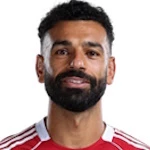
Mohamed Salah
Age 33 · Egypt
Egypt
