Dr Suzanne Huurman stands at a unique intersection of Caribbean football ambition and medical expertise, serving as head of medical staff for Curaçao's national men's team—a role that carries symbolic weight far beyond the typical remit of sports medicine. As the island nation of roughly 150,000 people prepares to compete on football's grandest stage, Huurman represents not merely a medical professional but a bridge between limited resources and outsized aspirations. Her appointment underscores how smaller footballing nations must innovate structurally to compete, and how individual expertise becomes magnified when operating within constrained systems. Curaçao's presence at the World Cup itself defies demographic logic; their qualification speaks to tactical nous, player development, and institutional resilience. Yet behind every squad's performance lies medical infrastructure—injury prevention, recovery protocols, psychological support—that often determines whether talent translates to tournament success. Huurman's role illuminates this hidden architecture and raises questions about equity, preparation, and what it takes for a nation of Curaçao's size to sustain competitive football at the highest level.
The Scale of the Challenge
Curaçao's population of approximately 150,000 makes it not merely a small footballing nation but arguably the smallest ever to reach a World Cup finals tournament. This demographic reality creates cascading logistical and medical challenges that larger federations never confront. When a squad of 23 players represents roughly 0.015 per cent of the national population, the loss of even one player to injury carries disproportionate weight. A serious hamstring tear or ligament damage doesn't simply sideline an individual; it potentially removes a significant percentage of the nation's playing talent pool, with limited domestic alternatives to call upon.

Dr Huurman's medical team must therefore operate with a preventative philosophy more rigorous than most. The margin for error is negligible. Unlike France or Germany, where injury to a key player might prompt a call to a capable domestic replacement, Curaçao cannot absorb such losses without material degradation of squad quality. This reality shapes every decision—training load management, recovery protocols, even the psychological approach to risk. Huurman must balance the competitive demands of World Cup football against the existential risk that injuries pose to a small nation's tournament viability. The medical staff becomes not an ancillary support function but a central strategic asset, as critical to Curaçao's chances as any tactical innovation or player recruitment decision.
Innovation Within Constraint
| # | Team | P | GD | Pts |
|---|---|---|---|---|
| 1 | 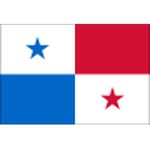 | 6 | +5 | 12 |
| 1 | 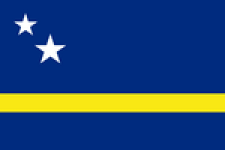 | 6 | +10 | 12 |
| 1 | 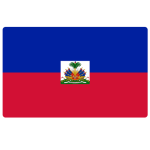 | 6 | +3 | 11 |
| 2 |  | 6 | +3 | 9 |
| 2 | 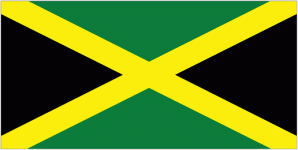 | 6 | +8 | 11 |
Smaller nations have historically compensated for limited resources through structural innovation and ruthless prioritisation. Curaçao's medical department, under Huurman's leadership, likely exemplifies this principle. With fewer players in the domestic league system and limited access to world-class training facilities compared to European powerhouses, the national team's medical infrastructure must be exceptionally efficient and strategically focused.
This often means leveraging technology and expertise in unconventional ways. Telemedicine consultations with specialists abroad, data-driven injury prevention algorithms, and partnerships with overseas clubs whose players represent Curaçao become essential. Many of Curaçao's squad play in European leagues—the Dutch Eredivisie, Belgian Pro League, and lower English divisions—meaning Huurman must coordinate care across multiple jurisdictions and club medical teams. This requires diplomatic skill, clear communication protocols, and the ability to influence decisions made by club doctors who have competing loyalties. The head of medical staff for a small nation becomes part administrator, part diplomat, part innovator. Huurman's appointment signals that Curaçao recognises this complexity and has invested in someone capable of navigating it. The question of how she manages these cross-border relationships, negotiates player availability, and maintains continuity of care across dispersed squad members will substantially influence Curaçao's tournament performance.
The Broader Context of Caribbean Football
Curaçao's World Cup qualification sits within a broader narrative of Caribbean football's evolution and the outsized influence of diaspora communities. The island's footballing strength derives partly from its geographic and cultural proximity to South America, partly from Dutch institutional inheritance, and significantly from players developed abroad who maintain national team eligibility. This creates a unique medical challenge: managing players whose primary club commitments lie elsewhere, whose injury histories are documented by foreign medical teams, and whose availability for international duty is perpetually negotiated.
Dr Huurman's role therefore extends beyond conventional sports medicine into player welfare advocacy and federation diplomacy. She must ensure that Curaçao's players are not overloaded by club commitments during international windows, that injury rehabilitation is coordinated across multiple medical systems, and that the national team's medical protocols are respected by overseas clubs. This is particularly acute for smaller nations, where clubs may view international football as a distraction from their own competitive objectives. Huurman's credibility and expertise become tools for elevating the status of national team football within the minds of club decision-makers. Her presence signals that Curaçao takes player welfare seriously—a message that resonates with modern football's increasing emphasis on athlete health and longevity.
Gender and Leadership in Football Medicine
Huurman's appointment as head of medical staff for a national men's team also carries significance within the context of gender representation in football's technical and medical infrastructure. Women remain substantially underrepresented in senior medical roles across professional football, particularly in men's elite football. A female head of medical staff for a World Cup-competing nation represents progress, though progress that remains incomplete across the sport globally.
Her visibility in this role may influence perceptions within Caribbean football and beyond, potentially opening pathways for other women in sports medicine and football administration. Yet it is crucial to assess her appointment on merit and expertise rather than symbolic value alone. The fact that Curaçao has entrusted its World Cup medical operation to Huurman suggests confidence in her qualifications, experience, and ability to manage the specific challenges outlined above. This confidence should be the primary frame; her gender is contextually relevant to broader conversations about representation, but her competence is what determines Curaçao's medical readiness.
What Lies Ahead
As Curaçao prepares for World Cup competition, the performance of its medical department will be scrutinised less than that of its outfield players, yet may prove equally consequential. Dr Suzanne Huurman's success will be measured not in dramatic recoveries or high-profile injury comebacks, but in the absence of preventable injuries, the maintenance of squad fitness across a compressed tournament schedule, and the seamless coordination of care for players scattered across multiple continents. These are unglamorous metrics, but they determine whether Curaçao's talent translates to results on the pitch. The broader lesson extends beyond one small nation: modern football success, particularly for resource-constrained federations, depends on excellence across every function—medical, tactical, administrative, and psychological. Huurman's appointment reflects this reality and positions Curaçao to compete with the structural sophistication that contemporary World Cup football demands.


