Ayyoub Bouaddi represents a new breed of footballer—one shaped not by the traditional academy conveyor belt of a European powerhouse, but by a deliberate choice to represent his heritage at the highest level. The young Moroccan talent, whose intellectual gifts extend far beyond the pitch, has become a symbol of a broader shift in how emerging nations attract and retain their brightest prospects. In an era when France's youth development system has long been regarded as the gold standard, capable of plucking talent from across the Francophone world, Bouaddi's decision to commit to Morocco carries weight that transcends a single player's career trajectory. It speaks to Morocco's growing ambition, the pull of national pride, and the recognition that mathematical brilliance and footballing excellence are not mutually exclusive—they can, in fact, complement one another in ways that traditional scouting has only recently begun to understand.
The Dual Mastery: Academic Excellence Meets Athletic Talent
Bouaddi's journey stands apart from the typical narrative of young footballers who sacrifice education for sport. His background as a mathematics prodigy demonstrates a cognitive sharpness that, while uncommon in professional football, has historically correlated with players who excel at reading the game, positioning, and tactical adaptation. The combination of mathematical reasoning and ball mastery is not new—players like Zinedine Zidane and Andriy Shevchenko were known for their intelligence on the pitch—but Bouaddi's explicit recognition as an academic high-achiever adds a modern dimension to his profile. In an age where data analytics and performance science dominate elite football, a player with genuine mathematical aptitude brings an intrinsic advantage. He is likely to absorb tactical instruction more rapidly, understand spatial geometry intuitively, and approach problem-solving on the pitch with the same methodical precision he applies to equations. This dual capability has become increasingly valuable as clubs invest heavily in analytics departments and demand that players understand not just what to do, but why they are doing it. Bouaddi's intellectual foundation suggests he will adapt more seamlessly to the demands of modern elite football than peers who rely solely on physical gifts or instinctive play.



France's Loss, Morocco's Strategic Gain
The decision to represent Morocco rather than France carries significant implications for both nations. France, with its unparalleled recent success—two World Cup finals in four years, a Nations League triumph, and a seemingly endless production line of world-class talent—has become accustomed to attracting players with Moroccan heritage. The French model of integration, whereby players with family roots across North Africa, West Africa, and the Caribbean are developed within the French system and represent Les Bleus, has been extraordinarily effective. Yet Bouaddi's choice suggests a subtle but meaningful shift in the calculus for young players with dual heritage. Morocco's run to the World Cup semi-finals in 2022, followed by their Nations League success, has elevated the prestige of representing the national team. The Atlas Lions are no longer a peripheral force; they are a genuine continental power with genuine aspirations at the World Cup. For a young player weighing options, the prospect of being a cornerstone of Morocco's next generation—potentially captaining the side at World Cup 2026—may now outweigh the security of joining France's already crowded roster of attacking talent. Bouaddi's commitment signals that Morocco is winning the battle for hearts and minds among its diaspora youth, a battle that will intensify as the 2026 tournament approaches.
| # | Team | P | GD | Pts |
|---|---|---|---|---|
| 1 |  | 3 | +5 | 7 |
| 1 |  | 3 | +2 | 7 |
| 1 |  | 3 | +4 | 9 |
| 1 |  | 3 | +6 | 7 |
| 1 |  | 3 | +6 | 9 |
The Broader Context: Morocco's Youth Revolution
Bouaddi's emergence must be understood within Morocco's wider investment in youth development and infrastructure. The Moroccan Football Federation has, in recent years, significantly upgraded its academy system, scouting networks, and coaching education programmes. The success of the 2022 World Cup squad—built largely on players developed domestically or in European leagues but committed to the national project—demonstrated that Morocco could compete at the highest level without relying on a constant influx of European-born players switching allegiance. Bouaddi represents the next phase: homegrown talent, intellectually gifted, and strategically positioned to lead Morocco's challenge in the coming decade. His profile also reflects Morocco's broader economic and educational development. The nation has invested heavily in STEM education and technical training, creating a generation of young people who are both academically accomplished and athletically ambitious. Bouaddi embodies this intersection. His choice to represent Morocco is not a sacrifice of opportunity but a recognition that the national team is now a genuine destination for elite talent, not a fallback option. This psychological shift is crucial for Morocco's long-term competitiveness and for the development of a sustainable, world-class football culture.
What Lies Ahead: Expectations and Potential Pitfalls
As Bouaddi steps into the spotlight, the expectations will be considerable. Morocco's fanbase, energised by recent success, will view him as part of the next generation capable of winning a World Cup. European clubs will monitor his development closely, aware that a player combining mathematical intelligence with elite athleticism could become a generational talent. Yet there are also risks. The pressure of representing a nation with such high hopes, combined with the burden of being positioned as a symbol of Morocco's rise, can overwhelm young players. Bouaddi will need to navigate the transition from prospect to established professional with care, supported by a coaching staff that understands both his intellectual needs and his footballing development. His trajectory over the next two to three seasons—whether he establishes himself as a regular starter, how he performs in continental and World Cup qualifiers, and how he adapts to the physical and mental demands of elite football—will determine whether his choice to represent Morocco proves prescient or premature.
The football world will be watching closely. Bouaddi's story is not merely about one talented young player; it is about the shifting balance of power in global football, the growing appeal of emerging nations, and the recognition that excellence comes in many forms—including the form of a mathematician who can also play.
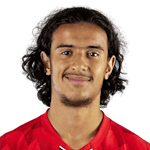
Ayyoub Bouaddi
Lille


