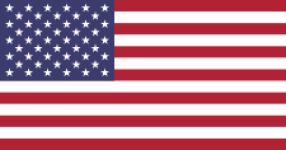
The suspension of Folarin Balogun ahead of the United States' World Cup knockout fixture against Belgium has been lifted following what sources describe as direct engagement from the Trump administration with FIFA leadership. The decision clears the way for the striker to feature in a match that carries enormous significance for American hopes in the tournament, and raises fresh questions about the intersection of political pressure and sporting governance at football's highest level.
Balogun's original one-match ban stemmed from disciplinary action taken during the group stage, a sanction that would have sidelined him for precisely the fixture the USMNT could least afford to lose him. The timing of the suspension's reversal—coming after high-level political intervention—has sparked debate about whether FIFA's decision-making processes remain insulated from external pressure, or whether the world governing body has become increasingly susceptible to influence from powerful political actors. For the United States, the outcome is unambiguously positive; for the broader integrity of international football governance, the implications are more troubling.
The Suspension and Its Original Context


Balogun's ban emerged from conduct during America's group-stage campaign, a disciplinary measure that appeared straightforward in its application. FIFA's regulations on player misconduct are designed to maintain standards of fair play and discipline across all competitions, with suspensions typically enforced without exception or appeal once the initial decision is rendered. The one-game sanction, while not career-altering, carried disproportionate weight given its timing: it would have removed a key attacking player from the knockout round, precisely when squad depth and continuity matter most.

The striker's importance to the USMNT's attacking setup cannot be overstated. In a tournament where American teams have historically struggled to generate consistent offensive threat against elite defences, Balogun represents a rare commodity—a player with the technical quality and composure to operate effectively at the highest level. His absence against Belgium would have forced tactical compromises and shifted burden to less-proven alternatives. The ban, therefore, represented not merely a minor inconvenience but a genuine competitive disadvantage at a critical juncture.
Political Pressure and FIFA's Capitulation
The suspension of Balogun's ban following Trump administration engagement with FIFA represents a striking departure from the governing body's stated commitment to sporting independence. FIFA has long positioned itself as an autonomous institution, insulated from political interference and bound only by its own regulations and the Laws of the Game. That positioning has been tested repeatedly—by authoritarian regimes, by wealthy nations, by commercial interests—but the principle has generally held, at least in public rhetoric.
The reversal in this case suggests either that FIFA's resolve has weakened considerably, or that the political pressure applied was sufficiently intense to override institutional resistance. The Trump administration's willingness to engage directly on a matter of sporting discipline signals a recalibration of how major political actors view their relationship with international sports governance. Where previous administrations might have lobbied quietly or accepted unfavourable sporting outcomes as part of the competitive landscape, this intervention was explicit and public—a statement that American political interests take precedence over FIFA's regulatory framework.
The precedent is troubling. If a ban can be suspended following presidential intervention, what other disciplinary decisions might be vulnerable to political pressure? The decision creates a two-tier system of accountability: one for nations with sufficient political leverage, another for those without. That asymmetry corrodes the legitimacy of FIFA's governance and undermines the principle that the rules apply equally to all participants.
Implications for World Cup 2026 and Beyond
The Balogun decision arrives at a moment when FIFA faces mounting scrutiny over its governance structures and susceptibility to external influence. With the 2026 World Cup approaching—a tournament co-hosted by the United States, Mexico, and Canada—questions about American political influence over FIFA decision-making will only intensify. If the Trump administration can secure the reversal of a player suspension, what other favourable rulings might be negotiated?
The decision also sets a concerning precedent for future tournaments. Other nations will inevitably seek similar interventions when their interests are at stake. The result could be a gradual erosion of FIFA's regulatory authority, replaced by a system where political power and diplomatic leverage determine outcomes. That trajectory benefits wealthy, powerful nations and disadvantages smaller footballing nations without comparable political clout. It transforms FIFA from a rule-bound institution into a forum where political negotiation supersedes sporting principle.
For the USMNT specifically, the reversal provides immediate tactical relief but longer-term reputational risk. American football has worked hard to establish credibility within the global game; victories achieved with the benefit of political intervention carry an asterisk that undermines their sporting value. A deep World Cup run achieved with Balogun available carries less prestige than one earned through tactical ingenuity and player development alone.
The Broader Question of Sporting Integrity
The suspension's reversal ultimately reflects a fundamental tension in modern international sport: the impossibility of maintaining genuine independence when competitions involve nations with vast political and economic power. FIFA operates within a system where member nations are also sovereign states, capable of applying diplomatic, economic, and political pressure. The fiction of sporting autonomy persists, but moments like this expose its fragility.
What remains to be seen is whether this intervention becomes normalized or remains an anomaly. If FIFA's leadership has genuinely capitulated to political pressure, expect similar interventions to multiply. If, conversely, this represents a one-off exception made under extraordinary circumstances, the institution's credibility might yet be salvaged. The next test will come soon enough—in another controversial decision, another disciplinary matter, another moment where political interests and sporting rules collide.
For now, Balogun will take the pitch against Belgium with the weight of presidential intervention behind him. Whether that proves decisive on the field remains to be seen. What is certain is that the decision has already altered something more fundamental: the relationship between political power and sporting governance at the world's most prestigious football competition.


